 Sunday 01 November 2026
 Ferhunde
The Star Wars universe is famous for its epic space battles, legendary Jedi, and unforgettable characters, but racing has always been an exciting part...
See more
 Homepage
 Blog
Home Blog
How to Spot AI-Generated Fake Videos? Beware of the Dangers of Deepfake Technology!
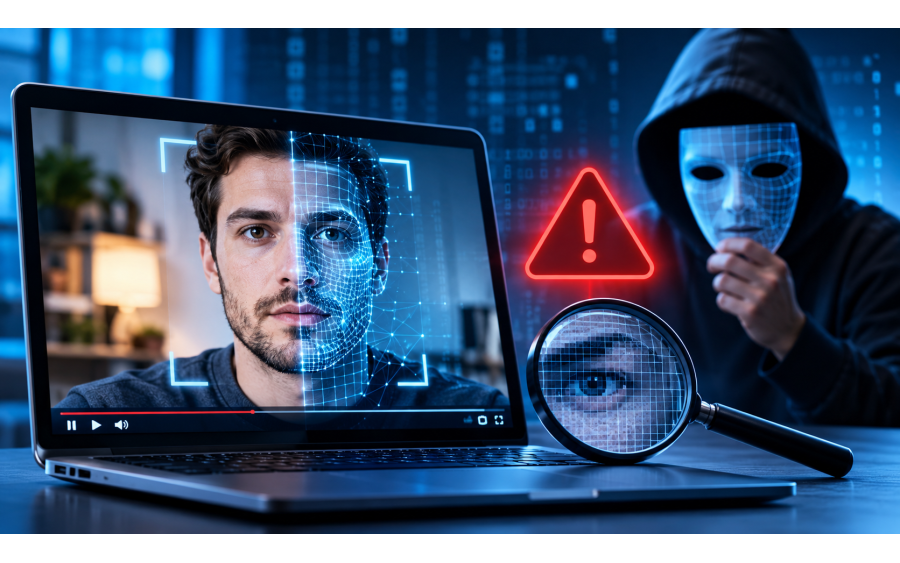
As artificial intelligence (AI) technologies continue to advance rapidly, they are creating new opportunities in the digital world while also introducing significant security risks. One of the most concerning developments is Deepfake technology, which allows images, voices, and videos of real people to be manipulated or entirely recreated using artificial intelligence.
Today, it is possible to make someone appear to say things they have never said or show them in places they have never visited.
So, how can you identify fake videos generated by artificial intelligence? Is it possible to distinguish deepfake videos from authentic footage? Here are some important details to keep in mind in today's digital world.
The term Deepfake is a combination of the words "Deep Learning" and "Fake." It refers to technology that uses artificial intelligence algorithms to transfer or recreate people's faces, facial expressions, and voices.
With this technology, it is possible to:
Place one person's face onto another person's body.
Create fake conversations by imitating someone's voice.
Make real people appear to perform actions they have never actually done.
Generate highly realistic videos featuring entirely AI-created people.
Although Deepfake technology can be used in filmmaking, entertainment, and digital content production, it also brings serious risks, including fraud, misinformation, and identity theft.
Videos created with artificial intelligence are becoming increasingly realistic. Therefore, simply watching a video at first glance may not be enough to determine whether it is genuine. However, certain visual and audio details can help identify suspicious content.
Facial movements in deepfake videos may sometimes look unnatural. Particular attention should be paid to blinking, lip movements, and facial expressions.
Lip movements that do not match the spoken words, frozen facial expressions, or sudden changes in appearance may indicate that a video has been manipulated.
Eye movements are another detail worth examining when analyzing AI-generated videos.
Unnatural eye movements, visual distortions around the eyes, or inconsistent light reflections may be suspicious signs. However, advanced AI models have significantly reduced these types of errors, so eye movements alone are not reliable evidence of a deepfake.
Deepfake technology can imitate not only images but also human voices.
A mismatch between a person's speech and lip movements, an unnatural-sounding voice, or unusual pronunciation may indicate suspicious content.
Even when you hear the voice of someone you know, you should not rely on voice recognition alone to verify their identity.
In authentic videos, lighting and shadows generally match the physical environment. However, some AI-generated videos may contain inconsistencies between facial lighting, the background, and surrounding objects.
Pay particular attention to the following details:
Color differences between the face and neck
Visual distortions around the hair and ears
Blurring around facial edges
Unnatural shadows
Visual artifacts during rapid movements
These signs may not appear in every fake video. Today's advanced AI systems can produce remarkably realistic results.
One of the most important ways to determine whether a video is genuine is to verify its source.
In particular, videos spreading rapidly on social media, containing sensational claims, or supposedly featuring celebrities should not be shared without verification.
It is important to check whether the video has been reported by reliable news organizations and whether the same statement has appeared on the verified social media accounts of the person involved.
The misuse of deepfake technology can create significant security problems for individuals, businesses, and society as a whole.
1. Online Scams: Scammers can imitate the voices and appearances of company executives or people you know to trick individuals into transferring money.
2. Fake News and Misinformation: Artificially generated conversations and videos can be used to mislead the public and spread false information.
3. Identity Theft: People's images and voices can be used without permission to create fake accounts or misleading content.
4. Corporate Security Risks: Employees can be targeted through fraudulent phone calls or video meetings in which scammers impersonate company executives.
5. Damage to Personal Reputation: Fake videos showing people saying things they never actually said can seriously damage their personal and professional reputations.
As artificial intelligence technologies continue to evolve, it is becoming increasingly important to pay attention to digital security.
You can reduce the risks associated with deepfakes by following these precautions:
Never assume that a video is authentic without verifying its source.
Research suspicious content before sharing it on social media.
Verify requests for money transfers or sensitive information through a separate communication channel, especially during voice or video calls.
Establish a shared verification method with family members and colleagues.
Be careful about publicly sharing personal images and voice recordings on social media.
Use reliable news sources and fact-checking platforms to investigate suspicious videos.
Additionally, Google's reverse image search feature and tools such as InVID-WeVerify can help investigate individual video frames and identify the origins of online content. However, these tools cannot independently prove that a video is authentic.
As artificial intelligence technologies continue to improve, distinguishing fake images and videos from authentic ones may become increasingly difficult. Real-time face and voice manipulation, in particular, is creating new challenges in the field of digital security.
At the same time, artificial intelligence can also be used to detect fake content. New analysis systems can examine visual inconsistencies, audio characteristics, and digital content traces to help identify suspicious videos.
In the future, technologies that verify the origins of digital content and content security standards are expected to become increasingly important.

The Star Wars universe is famous for its epic space battles, legendary Jedi, and unforgettable characters, but racing has always been an exciting part...
See more
