 Tuesday 20 October 2026
 Ferhunde
What Is Wi-Fi 7? Differences Between Wi-Fi 7 and Wi-Fi 6 Wireless internet technology continues to evolve, making it possible for more devices to sta...
See more
 Homepage
 Blog
Home Blog
How Is Artificial Intelligence Changing Gaming? Smart NPCs and New Experiences
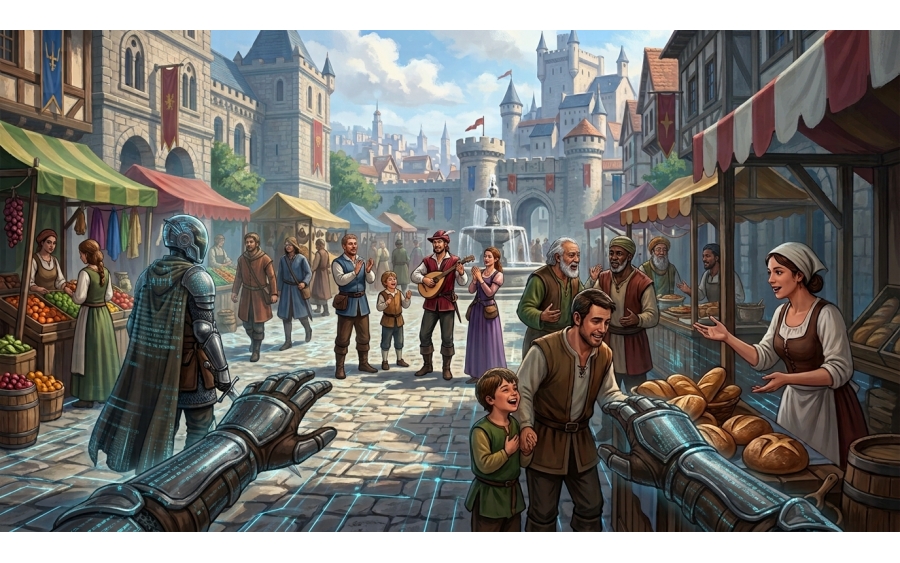
Video games are becoming more realistic, interactive, and personalized every day as technology continues to evolve. At the center of this transformation is artificial intelligence (AI). In particular, the question of how artificial intelligence is changing video games has become increasingly interesting to players who want to keep up with the latest developments in the gaming industry.
In traditional games, characters typically follow predefined commands and behaviors. However, thanks to next-generation AI systems, developers can create characters that respond to players' actions, analyze their surroundings, and make different decisions. Smart NPCs, dynamic game worlds, and personalized storylines are among the key developments shaping the future of gaming.
So, how is artificial intelligence affecting the gaming industry? What are smart NPCs, and what new experiences can they offer players?
Artificial intelligence has been used in video games for many years. Enemies that follow players, opponents that make decisions in strategy games, and vehicles controlled by AI in racing games are all examples of traditional AI applications.
Today, however, technologies such as machine learning, advanced decision-making systems, and generative AI are opening up new possibilities for game developers.
Artificial intelligence can help introduce the following features into games:
Smarter enemies: Opponents that analyze players' tactics and adopt different strategies.
Realistic NPCs: Characters that can engage in more natural conversations with players and respond to in-game events.
Dynamic storylines: Quests and narratives that can change based on players' choices.
Personalized difficulty levels: Gaming experiences that adapt to a player's performance.
Faster game development: AI-powered tools that assist with character design, dialogue generation, testing, and content creation.
These innovations are helping games evolve not only in terms of graphics and performance but also in the way players interact with the game world.
NPC stands for Non-Player Character and refers to a character in a game that is not directly controlled by the player. Examples include a merchant who gives quests, a character wandering through a city, or an enemy that attacks the player.
Traditional NPCs generally follow predefined dialogue and behavior patterns. When players ask the same question repeatedly, they usually receive the same response. Intelligent NPC systems, on the other hand, aim to make characters more flexible, responsive to in-game conditions, and capable of offering different interactions.
Imagine a character in an open-world game who takes the player's previous choices into account. If the player has helped that character before, the character might behave more friendly toward them. If the player has broken a promise or betrayed an agreement, the character's attitude could change.
AI-powered dialogue systems can also make it possible for players to have more natural conversations with in-game characters. However, these features are not available in every game, and their capabilities vary depending on the technology being used.
Intelligent NPC technologies have the potential to make game worlds feel more alive and responsive. Some of the main benefits they can offer players include the following:
Characters powered by advanced language models can generate responses that fit what players say instead of being limited to a handful of prewritten lines. This allows players to communicate more naturally with characters in the game world.
However, special rules and control mechanisms may be necessary to ensure that generated responses remain consistent with the storyline and the game's mechanics.
AI systems can be designed to consider players' previous actions and the current state of the game. As a result, characters may change their attitudes toward players or respond differently to specific situations.
This approach can be particularly valuable in role-playing games (RPGs), where it can make players feel that their decisions have a more meaningful impact on the experience.
An immersive game world depends on more than high-resolution graphics. Characters that interact with their surroundings, respond appropriately to events, and behave consistently are equally important.
AI-powered systems can help NPCs react to environmental conditions and respond more appropriately to players' actions, making the game world feel more believable.
Some AI applications can adapt the gaming experience based on a player's skill level, playstyle, or progress. For example, in strategy games, an opponent's behavior might change depending on the tactics the player uses.
This approach can increase replayability and make the same game feel different for different players.
Generative AI refers to technologies that can create new text, images, audio, and other digital content. In the gaming industry, these systems are being explored for a wide range of applications, from storytelling to character dialogue.
In traditional games, quests and storylines are generally prepared in advance by developers. Generative AI, however, can be used to create new dialogue or variations of quests within predefined limits.
For example, in a fantasy role-playing game, a character might deliver different lines of dialogue depending on the existing storyline and the player's progress. This means that every encounter does not necessarily have to unfold in exactly the same way.
Nevertheless, there is no guarantee that every piece of AI-generated content will be high-quality, consistent, or appropriate for the storyline. For this reason, content moderation, narrative design, and technical safeguards remain important responsibilities for game developers.
Artificial intelligence is not only influencing the features players experience directly. It is also becoming a valuable supporting technology throughout the game development process.
With the right tools, developers can use AI to assist with tasks such as:
Speeding up coding and debugging.
Drafting in-game dialogue and story concepts.
Generating ideas for character concepts and environment designs.
Creating test scenarios and identifying certain types of bugs.
Automating repetitive development tasks.
These tools can help smaller teams turn their ideas into working prototypes more quickly. However, AI-generated code, visuals, and other content still need to be reviewed and tested. Copyright, data security, performance, and quality are also important considerations during development.
Although artificial intelligence can improve the gaming experience, it also introduces several challenges.
Performance and costs: Some advanced AI systems require significant computing power or depend on online services.
Inconsistent character behavior: AI-generated dialogue may sometimes contradict the storyline or produce unexpected responses.
Privacy: When players' conversations or behavioral data are processed, it is important to understand how that information is collected and used.
Maintaining creative control: Allowing AI to generate every piece of content can make it more difficult for developers to maintain a consistent narrative, atmosphere, and artistic vision.
Human effort and creativity: Although AI can simplify certain tasks, this does not mean it will completely replace the creative contributions of game designers, artists, writers, and programmers.
Ultimately, a successful AI-powered gaming experience depends on combining the technology with thoughtful design decisions.
In the coming years, artificial intelligence is likely to find more applications throughout the gaming industry. Developments in natural language processing, character behavior modeling, and content generation could make gaming experiences increasingly interactive.
Future games may offer more experiences in which players can speak to characters using their voices, encounter different quests based on their decisions, and interact with game worlds that respond to their actions.
In multiplayer games, AI may also take on various roles in in-game assistance, moderation, matchmaking, and testing. However, how widely these applications will be adopted depends on the technologies available, implementation costs, and player expectations.
The key is to use artificial intelligence not simply to generate more content, but to create more meaningful and enjoyable experiences for players.
As AI technology continues to advance, smart NPCs, adaptive storylines, and more interactive game worlds could become increasingly important parts of the gaming experience. The future of gaming will depend on how effectively developers combine these technologies with creativity, storytelling, and engaging gameplay.

What Is Wi-Fi 7? Differences Between Wi-Fi 7 and Wi-Fi 6 Wireless internet technology continues to evolve, making it possible for more devices to sta...
See more