

 Saturday 17 October 2026
 Ferhunde
Technological Features to Consider When Choosing a Power Bank Smartphones, tablets, wireless earbuds, and other portable electronic devices have beco...
See more
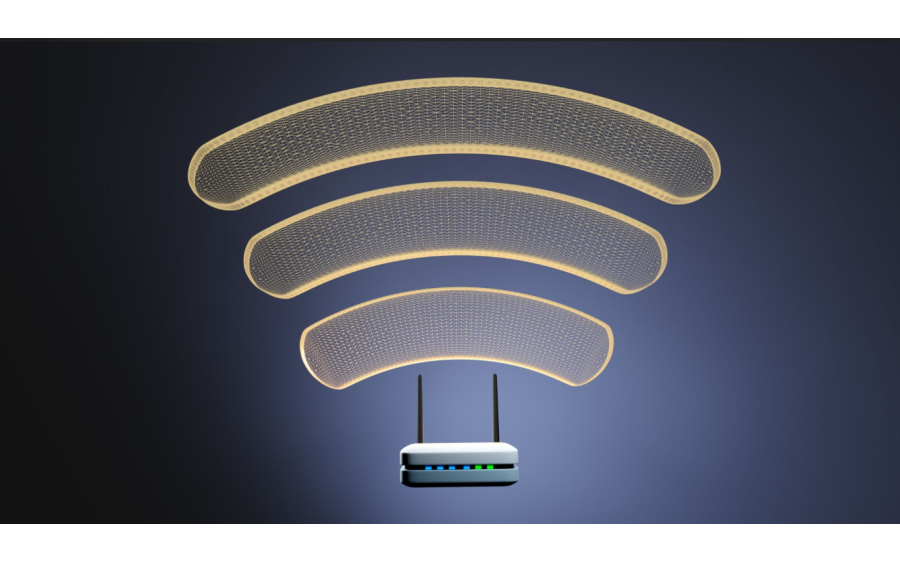
Wireless internet technology continues to evolve, making it possible for more devices to stay connected simultaneously. Online gaming, high-resolution video content, cloud-based applications, and smart home systems are increasing the demand for better internet performance. One of the latest wireless networking technologies attracting attention is Wi-Fi 7.
Wi-Fi 7 has been developed to deliver higher data transfer speeds, lower latency, and more efficient connectivity in congested network environments. It introduces several notable improvements, particularly for users who need high internet speeds, gamers, and households with many connected devices.
So, what is Wi-Fi 7, how does it differ from Wi-Fi 6, and is upgrading to the next generation of wireless connectivity really necessary? Let’s explore this technology, its technical features, and its everyday benefits.
Wi-Fi 7 is the seventh generation of Wi-Fi technology, based on the IEEE 802.11be standard. Building on Wi-Fi 6 and Wi-Fi 6E, it aims to deliver higher data transfer capacity, more efficient channel utilization, and more reliable connectivity.
Wi-Fi 7 can theoretically achieve maximum data transfer speeds of up to 46 Gbps under suitable technical configurations. However, this figure represents a theoretical upper limit defined by the standard. Actual speeds depend on the router's specifications, connected devices, signal quality, internet infrastructure, and the level of wireless network congestion in the surrounding area.
One of the most important differences between Wi-Fi 7 and previous generations is that it does not focus solely on delivering higher speeds. It also aims to reduce latency and improve the performance of devices sharing the same network by using available connection resources more efficiently.
To understand the advantages of Wi-Fi 7, it is worth taking a closer look at the innovations behind this technology.
Wi-Fi 7 supports channel bandwidths of up to 320 MHz in the supported 6 GHz band. By comparison, the widest channels supported by Wi-Fi 6 and Wi-Fi 6E are 160 MHz.
Channel bandwidth is one of the key factors affecting how much data can be transmitted over a wireless connection at a given time. Wider channels can help achieve higher data transfer speeds under suitable conditions.
This feature can be particularly beneficial when transferring large files, streaming high-resolution media, and running applications that require substantial bandwidth.
However, both the router and the connected device must support the relevant features to take advantage of 320 MHz channel bandwidth. The availability of the 6 GHz band also depends on the country and local regulations.
One of the most notable innovations in Wi-Fi 7 is Multi-Link Operation (MLO). This feature allows compatible devices to use multiple wireless links across supported frequency bands.
With previous Wi-Fi generations, devices generally communicated over a single band at a time. Wi-Fi 7 can take advantage of multiple links in supported MLO configurations. This can increase data transfer capacity, reduce latency, and help maintain more reliable connectivity under congested network conditions.
For example, imagine someone playing an online game while another person streams a 4K video and someone else downloads a large file. On compatible devices, MLO can help use available network resources more efficiently, potentially improving performance in these situations.
One important detail to keep in mind is that the benefits of MLO depend on the types of connections supported by both the router and the client device. Not all Wi-Fi 7 devices deliver the same level of MLO performance.
Wi-Fi 7 supports 4096-QAM, also known as 4K QAM modulation. Compared with the 1024-QAM used in Wi-Fi 6, it allows more data to be transmitted during the same transmission period under suitable signal conditions.
In theory, 4K QAM can provide approximately 20% greater data transmission efficiency than 1024-QAM. However, achieving this improvement requires a strong and high-quality wireless signal.
If there are walls between the router and the device, the distance is too great, or the signal quality is poor, the benefits may be reduced. Therefore, 4K QAM does not guarantee the same speed increase in every environment.
In apartment buildings with many neighboring wireless networks or workplaces with numerous connected devices, signal interference and overlapping transmissions can affect network performance.
Wi-Fi 7 introduces advanced channel management features that allow devices to use available portions of a channel when other portions are affected by interference. Technologies such as Multi-RU and preamble puncturing help make more efficient use of available wireless resources.
This approach can improve the utilization of network capacity, particularly in environments where numerous wireless networks operate nearby.
Wi-Fi 6 technologies such as OFDMA and MU-MIMO already help multiple devices communicate more efficiently over the same network. Wi-Fi 7 builds on this foundation with wider channels, advanced modulation, and MLO.
As a result, the main difference when upgrading to Wi-Fi 7 is not limited to download speeds. It also involves managing heavy data traffic and multiple connection demands more effectively.
The technical features of Wi-Fi 7 can offer advantages across several everyday use cases.
In online gaming, latency and connection stability are just as important as internet speed. Wi-Fi 7 features such as MLO can help reduce latency and limit connection fluctuations under supported conditions.
This can provide a more consistent wireless connection, particularly for competitive gaming. However, in-game latency is also affected by factors such as the distance to the game server, the internet service provider, network congestion, and other connection conditions.
High-resolution video content can place greater demands on network capacity, especially when multiple devices stream content simultaneously.
Wi-Fi 7's high data transfer capacity can make it easier to handle heavy media traffic when used with compatible devices. With suitable internet infrastructure and streaming service conditions, it can help users enjoy high-resolution content more smoothly.
The capacity of a wireless network becomes especially important when downloading large game files, high-resolution videos, and extensive software packages.
Wi-Fi 7-enabled routers and devices can achieve high data transfer speeds when sufficient internet bandwidth and suitable signal conditions are available. This capacity can also be useful when transferring files between computers or storage systems on a local network.
Smart TVs, smartphones, computers, security cameras, and other connected devices may all operate on the same wireless network.
Wi-Fi 7's improved network management and capacity can be beneficial in environments where many devices are connected simultaneously. However, not every device in the home needs to support Wi-Fi 7. Older devices can still connect to a Wi-Fi 7 network through backward compatibility.
Whether upgrading to Wi-Fi 7 is worthwhile depends on your internet usage and the devices you use.
Upgrading to Wi-Fi 7 may be beneficial for:
Households where many devices connect to the internet simultaneously.
Users who want to make better use of a high-speed fiber internet connection.
People who frequently download large files or transfer data over a local network.
Gamers who want lower latency and more stable connectivity.
Users with newer smartphones, computers, and other Wi-Fi 7-compatible devices.
Wi-Fi 6 may still be sufficient for:
Users who primarily browse websites, use social media, and stream standard video content.
People who are satisfied with their current wireless connection.
Users whose internet package offers significantly less bandwidth than Wi-Fi 7 could potentially provide.
People who do not yet own devices that support Wi-Fi 7.
Before purchasing a new router, consider more than just its Wi-Fi generation. Internet speed, home size, router placement, Ethernet connectivity, and the wireless standards supported by your connected devices are also important factors.
To take full advantage of Wi-Fi 7, both the device providing the wireless network and the device connecting to it must support Wi-Fi 7.
The main requirements to consider are:
A Wi-Fi 7-compatible router: You need a networking device that supports the features offered by the new standard.
A Wi-Fi 7-compatible smartphone or computer: The wireless networking hardware in the client device must also support the relevant features.
Sufficient internet infrastructure: The speed provided by your internet service provider affects your online experience.
Suitable signal conditions: The distance between the router and the connected device, along with physical obstacles, can affect performance, particularly at higher frequencies.
Wi-Fi 7 is backward compatible with previous Wi-Fi generations. This means older devices can still connect to a Wi-Fi 7 network under suitable conditions. However, devices that do not support Wi-Fi 7 cannot use its advanced features.
As the number of connected devices and the amount of network traffic continue to grow, expectations for wireless connectivity are also increasing. Wi-Fi 7 represents an important step forward for bandwidth-intensive applications, enhanced online gaming experiences, and environments with many connected devices.
As next-generation computers, smartphones, gaming systems, and home networks become more widespread, the capacity and connectivity efficiency offered by Wi-Fi 7 may become increasingly valuable.
Nevertheless, the real benefits of Wi-Fi 7 are not limited to purchasing a new router. Internet infrastructure, device compatibility, network configuration, and the environment in which the network operates must all be considered together.
Technological Features to Consider When Choosing a Power Bank Smartphones, tablets, wireless earbuds, and other portable electronic devices have beco...
See more
