

 Tuesday 01 September 2026
 Ferhunde
Some games have a story long before they actually reach players. 1666: Amsterdam is one of them. The project has been surrounded by uncertainty for ye...
See more
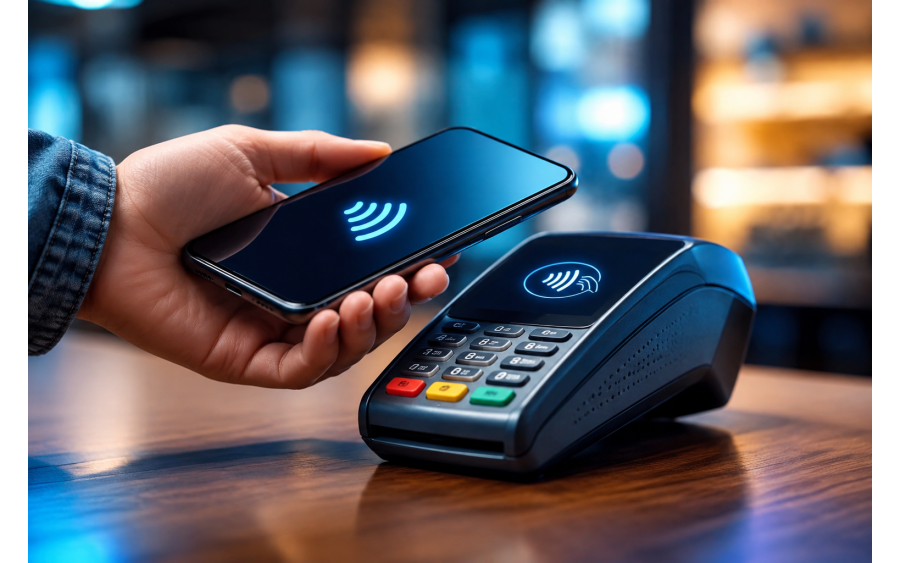
Today, smartphones and other technological devices offer many features that make our daily lives easier. One of these technologies is NFC, which is increasingly being used for contactless payments, quick data transfer, and connecting devices.
So, what is NFC, how does it work, and where is it used? In this article, we take a detailed look at what NFC technology is, its areas of use, its advantages, and the important security considerations you should know about.
NFC (Near Field Communication) is a short-range wireless communication technology. NFC allows two compatible devices to exchange data wirelessly when they are placed very close to each other.
NFC typically works within a distance of a few centimeters. This short communication range makes the technology particularly useful for applications such as contactless payments and secure device pairing.
NFC technology can be found in smartphones, smartwatches, payment terminals, transportation cards, and various smart tags.
NFC technology enables short-range communication using radio frequency. When two NFC-enabled devices are brought close to each other, a connection can be established and specific information can be transferred between them.
Both devices do not necessarily need to transmit data in the same way for NFC to work. For example, an NFC tag can operate without its own power source. Instead, it can use the electromagnetic field generated by a nearby NFC-enabled smartphone to transfer the information stored on the tag.
For this reason, NFC tags can be very small, affordable, and practical solutions for many different applications.
NFC technology is used in many areas of everyday life, perhaps more than you might expect.
One of the most common uses of NFC is contactless payment systems.
An NFC-enabled smartphone or smartwatch can be brought close to a compatible payment terminal to make a payment. This allows users to complete purchases quickly and conveniently without using a physical bank card.
With the growing popularity of mobile payment systems, NFC has become an important technology for everyday shopping.
NFC can also be used to quickly pair certain devices.
For example, bringing a smartphone close to an NFC-enabled accessory or device can initiate the connection process. This method can make it easier for users to connect devices without having to navigate through lengthy settings menus.
An NFC tag consists of a small chip and antenna that can store specific information.
When a smartphone is brought close to an NFC tag, the information stored on the tag can be read. For example, an NFC tag can:
Open a website.
Display contact information.
Connect to a Wi-Fi network.
Open a location in a map application.
Display a digital business card.
Trigger a specific smartphone function.
For this reason, NFC tags can be used for both personal and commercial purposes.
NFC technology is also used in public transportation and transit systems in some cities.
NFC-enabled cards or mobile devices can be tapped on transportation terminals to pay fares or complete access and entry procedures.
These systems can make transactions faster at turnstiles and payment points.
NFC can also be used in various smart cards and access control systems.
Employee ID cards, hotel room cards, event entry cards, and certain access control systems can make use of NFC or similar contactless technologies.
This allows contactless cards to replace physical keys or other authentication methods in certain situations.
As traditional business cards become increasingly digital, NFC technology has also started to become more common in the business world.
An NFC-enabled business card can open a person's contact information, website, or social media profiles when a smartphone is brought close to it.
This method is both practical and environmentally friendly, as it can reduce the need for paper business cards.
NFC can also be used in smart home technologies.
For example, NFC tags placed at specific locations around a home can trigger predefined actions when scanned with a smartphone.
An NFC tag can be used to change a specific smartphone setting, open an application, or trigger a particular automation within a smart home system.
There are several reasons why NFC technology has become increasingly popular.
NFC only requires compatible devices to be placed very close to each other. This makes it particularly practical for payment and quick connection processes.
One of the biggest advantages of NFC is its simplicity. In many cases, users can simply bring their device close to an NFC reader or tag to complete an action.
Many NFC tags do not have a built-in battery. This allows them to operate as low-power solutions that can be used for long periods of time.
NFC is not limited to payment systems. It can be used in transportation, marketing, smart home systems, digital business cards, device pairing, and many other areas.
The very short operating range of NFC provides certain security advantages. However, not every NFC-based system is automatically completely secure.
In contactless payment systems, different security technologies such as device authentication, encryption, and tokenization can be used to protect transactions. Users should keep their smartphones updated, use a screen lock, and be cautious when interacting with unfamiliar NFC tags.
It is also important to check whether links opened through an NFC tag are trustworthy. Links from unknown sources may redirect users to fake or malicious websites.
No. Not every smartphone has NFC support.
Many modern mid-range and high-end smartphones include NFC, while some entry-level or older models may not support the technology.
To find out whether your phone supports NFC, you can check its technical specifications or look through the device's settings. On Android devices, the NFC option is generally found under connection or wireless settings. On iPhone models, NFC support varies depending on the model and the feature being used.
Whether you should keep NFC turned on or off is entirely up to you.
If you frequently use contactless payments, NFC tags, or other NFC features, keeping NFC enabled can make these functions more convenient. If you rarely use NFC, you can simply turn it on when needed.
On modern devices, having NFC enabled does not by itself mean that your phone can be easily compromised. However, as with any technology, it is important to be cautious when interacting with unknown devices and NFC tags.
As the use of contactless technologies continues to expand, NFC is likely to become part of even more applications in the future.
Mobile payment systems, digital identity solutions, smart products, transportation systems, and digital business cards are among the key areas that are helping expand the use of NFC technology.
In particular, the growing role of smartphones in everyday life is likely to ensure that NFC remains an important technology for improving convenience and simplifying the user experience.

Some games have a story long before they actually reach players. 1666: Amsterdam is one of them. The project has been surrounded by uncertainty for ye...
See more

After years away from the spotlight, the Onimusha series is finally returning with a brand-new adventure. Onimusha: Way of the Sword brings Capcom's c...
See more
