

 Monday 05 October 2026
 Ferhunde
The SILENT HILL series has long been recognized as one of the defining names in psychological horror. Rather than relying solely on traditional jump s...
See more
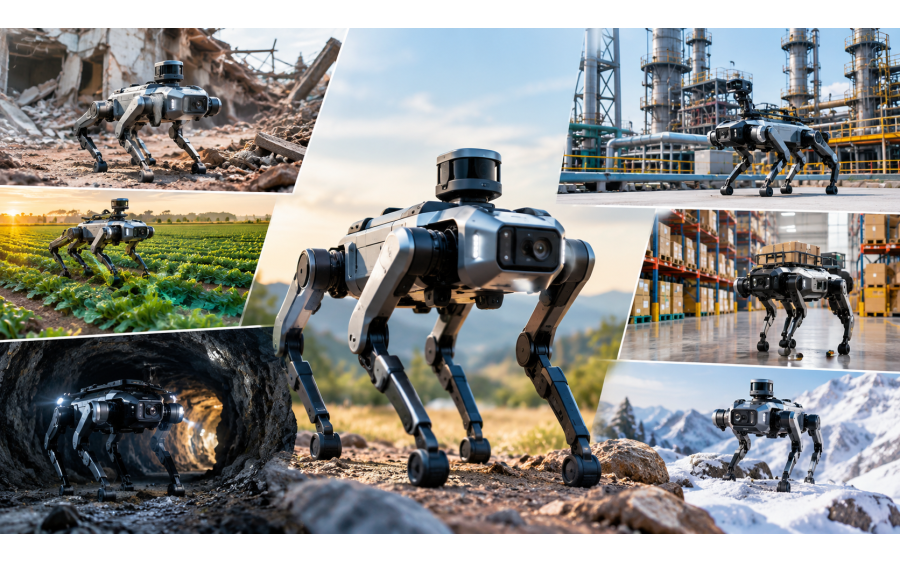
As robot technology continues to develop rapidly, robot dogs have become one of the most remarkable technologies in recent years. Thanks to their four-legged design, these robots can move across challenging terrain and are being used in a wide range of fields, from security and industry to search and rescue and logistics.
So, what exactly are robot dogs used for? In which industries are they being used, and in what areas of our lives might we see them more frequently in the future?
Robot dogs are advanced robots that can move on four legs and can be equipped with sensors and various artificial intelligence systems. They are designed to navigate environments where traditional wheeled robots may struggle, such as stairs, rocky terrain, sloped surfaces, and uneven ground.
Robot dogs can typically be equipped with cameras, LiDAR, thermal cameras, distance sensors, and AI-powered software. These technologies allow them to perceive their surroundings, overcome obstacles, and perform specific tasks either autonomously or through remote control.
While some models are mainly used for observation and data collection, others can perform more advanced tasks such as transportation, inspection, and operations in hazardous environments.
One of the most important applications of robot dogs is search and rescue operations.
Robot dogs can be used in areas where it is dangerous for people to enter, such as earthquake zones, fires, mine accidents, or collapsed buildings. Thanks to their small and agile design, they can move across debris and use onboard cameras to help rescue teams remotely inspect the area.
Robots equipped with thermal cameras can, under suitable conditions, detect temperature differences and support search operations.
These capabilities make robot dogs particularly important in terms of disaster response technology.
Robot dogs have also started to be used in the security sector.
Equipped with cameras and sensors, they can patrol designated areas and transmit visual and environmental data to operators.
The use of robot dogs in large facilities, power plants, warehouses, and hard-to-access areas can reduce the need for people to continuously operate in potentially dangerous environments.
As artificial intelligence technology develops, robots may also become capable of analyzing unusual activity in their surroundings in increasingly sophisticated ways.
Another important application of robot dogs is industrial facilities.
Factories require regular inspections of machinery and equipment. Robot dogs can move around facilities and collect data such as temperature, sound, vibration, and visual information through various sensors.
For example, if a machine shows an unusually high temperature or produces an abnormal sound, the system can alert maintenance teams.
This approach can contribute to the development of predictive maintenance systems. As a result, potential problems can be detected before they turn into major failures.
Construction sites are another area where robot dogs can be useful.
Robots can move around construction sites and collect images and data from specific areas. This information can then be used to monitor project progress, conduct site inspections, or identify potential problems.
Using robots in areas that are difficult or dangerous for workers to access, such as elevated, narrow, or hazardous locations, can provide significant safety advantages.
Mines are highly hazardous environments for human workers. They can involve various risks, including gas leaks, cave-ins, and poor visibility.
Robot dogs can be used to conduct preliminary exploration in areas where it would be too risky for people to enter.
With their sensors, they can collect information about the environment and transmit the data to teams working remotely.
For this reason, robot dogs could become an important part of safety and remote inspection technologies in mining.
Regular inspections are extremely important in large energy facilities such as power plants and oil and gas facilities.
Robot dogs can follow predetermined routes inside facilities and inspect equipment. Using thermal cameras and other sensors, they can help identify abnormal temperatures and certain technical problems.
In large facilities where continuous human inspection is difficult, using robots can provide advantages in terms of time and labor efficiency.
Robot dogs are expected to become more widely used in the logistics sector in the future.
Thanks to their four-legged movement systems, robots can navigate different types of terrain and assist with transporting certain products or equipment.
They can also be used for tasks such as inventory monitoring, inspecting shelves, and monitoring warehouse environments.
The development of robot dogs in this area is closely associated with smart warehouses and automation systems.
Robot dogs are not limited to cities and factories. They can also be used in agricultural environments.
They can move across large farming areas, capture images of crops and fields, and collect data to identify changes in specific areas.
With camera and sensor technologies, robot dogs can help farmers monitor crop development, assess field conditions, and identify certain problems at an early stage.
In the future, combining robot dogs with artificial intelligence could contribute to the expansion of smart farming applications.
Robot dogs can also be used for research purposes.
They can be particularly useful in caves, volcanic areas, high mountains, and other challenging environments that are difficult or dangerous for humans to access.
The images, temperature readings, distance measurements, and environmental data collected by these robots can be analyzed by researchers.
This makes it possible to conduct research in environments where direct human presence would pose significant risks.
Robot dogs are also being used for educational and R&D purposes at universities and technology research centers.
Students and researchers can use these robots to study areas such as artificial intelligence, robotics, computer vision, sensor technology, and autonomous movement.
Because robot dogs provide a platform on which different technologies can be tested together, they have become valuable tools in robotics research.
There are many reasons why robot dogs are being adopted across different industries.
Their main advantages include:
Ability to move across challenging terrain
Ability to climb stairs and overcome obstacles
Remote operation
Ability to collect data using cameras and sensors
Ability to reduce human exposure to hazardous environments
Ability to perform specific tasks for extended periods
Ability to gain autonomous movement capabilities through artificial intelligence
Ability to assist with regular inspections of industrial facilities
However, robot dogs are not generally replacing human workers entirely at this stage. They are mostly considered support systems that assist humans with their tasks or operate in environments where it would be risky for people to enter.

The SILENT HILL series has long been recognized as one of the defining names in psychological horror. Rather than relying solely on traditional jump s...
See more

Where Is Smart Glasses Technology Heading? Developments in the technology world continue to change the way we interact with digital devices. After sm...
See more
